The Future of Industrial Energy: Inside the Energy Hub Model
Why Industrial Parks Need a New Energy Infrastructure
Industrial energy consumption is changing rapidly.
Factories, logistics centers, EV charging infrastructure, cold storage facilities, and high-demand industrial operations are increasing pressure on existing electrical infrastructure.
At the same time:
- electricity prices remain volatile
- grid connection upgrades are slow and expensive
- electrification demand keeps growing
- companies require higher resilience and energy stability
- renewable integration creates new operational challenges
Traditional infrastructure models are no longer enough.
The future belongs to intelligent energy ecosystems.
At Ziman Flux, we call this model:
The Energy Hub
What Is an Energy Hub?
An Energy Hub is a centralized energy optimization platform designed to serve multiple companies within an industrial environment.
Instead of every company operating independently with isolated energy strategies, the entire industrial park becomes a coordinated and optimized energy ecosystem.
The Energy Hub combines:
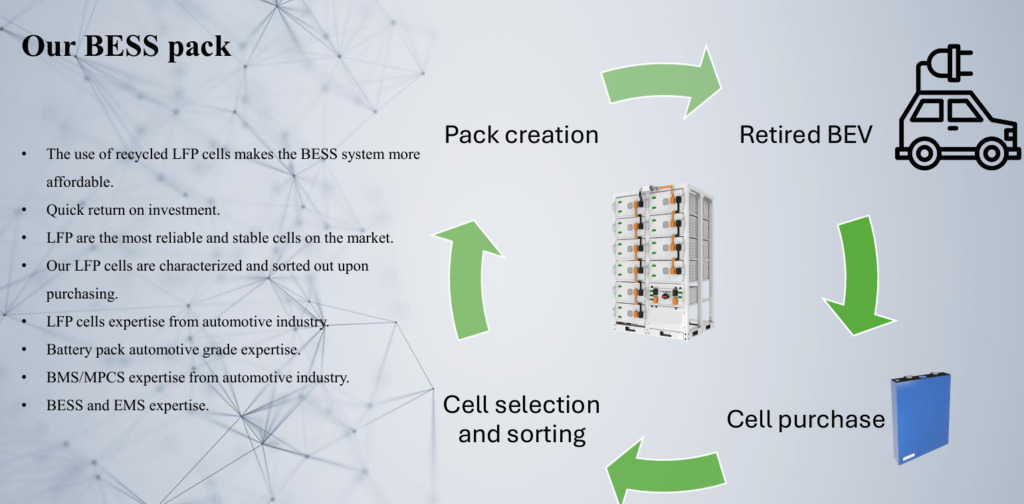
- Battery Energy Storage Systems (BESS)
- Energy Management Systems (EMS)
- smart metering
- predictive optimization
- renewable integration
- real-time energy orchestration
The result is a smarter and more flexible energy infrastructure.
The Core Problem Industrial Parks Face
Many industrial parks already operate near their grid connection limits.
Example:
| Parameter | Typical Scenario |
|---|---|
| Available Grid Capacity | 5 MW |
| Real Peak Demand | 8 MW |
| Grid Upgrade Time | 2–5 years |
| Infrastructure Upgrade Cost | Very High |
Without energy storage:
- expansion becomes difficult
- electrification slows down
- operational risk increases
- power peaks create penalties
- companies compete for available capacity
An Energy Hub changes this completely.
How the Energy Hub Works
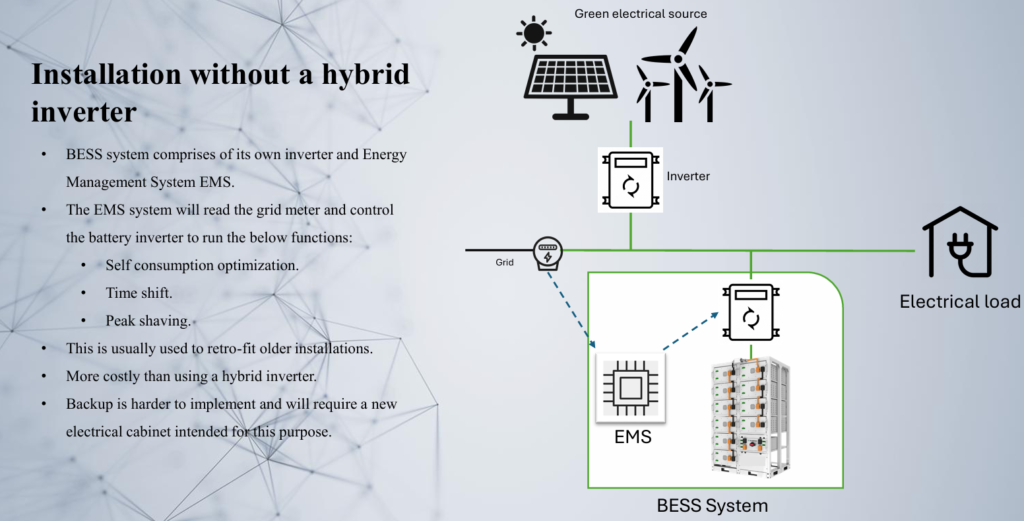
The Energy Hub introduces a shared energy layer between the grid and industrial consumers.
Simplified Architecture
                 GRID CONNECTION
                        |
                 Main Substation
                        |
             +-------------------+
             |   EMS PLATFORM    |
             +-------------------+
                        |
             +-------------------+
             |   SHARED BESS     |
             +-------------------+
                        |
               Industrial Microgrid
                        |
      ---------------------------------------
      |             |             |          |
 Company A     Company B     Company C   Company D
The EMS continuously analyzes:
- energy demand
- battery status
- electricity prices
- forecasted consumption
- available capacity
and dynamically optimizes energy flows across the site.
Shared Energy Infrastructure
One of the most powerful aspects of the Energy Hub is shared infrastructure.
Instead of every company installing independent batteries, the industrial park can operate a centralized storage platform.
This creates:
- higher utilization efficiency
- lower infrastructure costs
- improved scalability
- shared operational optimization
Not every company reaches peak demand at the same time.
This diversity of consumption profiles allows the system to optimize energy usage dynamically.
Flexible Participation Models
Not all companies need the same level of energy services.
The Energy Hub supports multiple participation models simultaneously.
Full Participation
Companies use:
- battery optimization
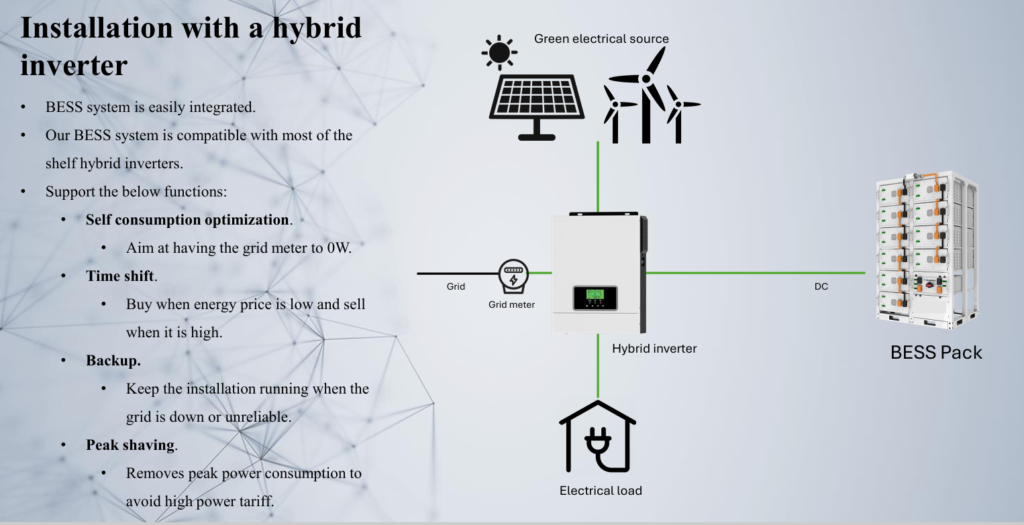
- peak shaving
- backup services
- energy arbitrage
- dynamic optimization
Partial Participation
Companies may only use:
- backup power
- EV charging optimization
- limited battery capacity
Bypass Mode
Some companies may prefer to remain fully independent.
In this case:
- they continue using direct grid energy
- they do not participate in shared storage
- they maintain traditional billing structures
This hybrid architecture enables gradual adoption with minimal operational friction.
Peak Shaving: One of the Biggest Opportunities
Industrial energy costs are not only based on energy consumption.
Power peaks can generate extremely high penalties.
The Energy Hub uses battery storage to absorb these peaks.
Instead of requesting additional power from the grid during short periods:
- the BESS supplies the extra demand
- contracted power remains lower
- infrastructure upgrades may be avoided
This creates substantial operational savings.
Energy Storage as Infrastructure
Battery systems are no longer just backup assets.
They are becoming strategic infrastructure.
Modern BESS platforms can provide:
- peak shaving
- backup continuity
- renewable integration
- EV charging support
- energy arbitrage
- grid stabilization
- operational flexibility
The real value emerges when storage is intelligently orchestrated by software.
EMS: The Intelligence Layer
The EMS (Energy Management System) is the brain of the Energy Hub.
It continuously decides:
- when to charge batteries
- when to discharge
- how to distribute power
- which loads receive priority
- how to minimize energy costs
- how to maximize asset performance
At Ziman Flux, we believe the EMS is where the true long-term value exists.
Hardware becomes standardized over time.
Optimization intelligence does not.
Solar + Storage Integration
The Energy Hub architecture is fully compatible with renewable generation.
Solar energy can:
- directly supply industrial loads
- charge the battery system
- reduce grid dependency
- improve ROI
- reduce energy volatility
The combination of:
Solar + BESS + EMS
creates one of the most powerful industrial energy optimization models available today.
Operational Resilience and Backup Power
Many industrial operations cannot tolerate downtime.
The Energy Hub can provide:
- backup energy
- critical load continuity
- intelligent redundancy
- operational resilience
This is especially valuable for:
- logistics hubs
- cold storage
- manufacturing
- data processing facilities
- industrial automation
- mission-critical infrastructure
The Evolution Toward Smart Industrial Microgrids
The long-term vision goes beyond energy savings.
Industrial parks are evolving into:
Intelligent Energy Ecosystems
where energy becomes:
- flexible
- orchestrated
- predictive
- optimized in real time
Future Energy Hubs may integrate:
- local energy markets
- EV fleet orchestration
- AI forecasting
- dynamic flexibility participation
- Virtual Power Plant capabilities
- advanced grid services
Why This Matters Now
Several global trends are accelerating the need for Energy Hubs:
- electrification growth
- rising industrial power demand
- EV infrastructure expansion
- grid congestion
- renewable adoption
- pressure for operational efficiency
- energy resilience requirements
Industrial parks that modernize early gain:
- competitive operational advantages
- infrastructure scalability
- long-term energy flexibility
- lower operational costs
The Ziman Flux Vision
At Ziman Flux, we see industrial energy as a continuously optimized system.
We combine:
- EMS intelligence
- BESS integration
- EPC execution
- operational optimization
- scalable infrastructure design
to create the next generation of industrial energy platforms.
Our objective is not simply to install batteries.
Our objective is to build:
The Operating System for Industrial Energy.
Key Benefits of the Energy Hub Model
| Benefit | Impact |
|---|---|
| Peak Shaving | Reduced power penalties |
| Shared Storage | Lower infrastructure cost |
| Backup Continuity | Increased resilience |
| Solar Integration | Improved ROI |
| Grid Optimization | Delayed infrastructure upgrades |
| EMS Optimization | Real-time operational efficiency |
| Scalable Electrification | Future-ready infrastructure |
Final Thoughts
Energy infrastructure is becoming software-driven.
The future industrial park will not simply consume energy.
It will:
- manage it
- optimize it
- store it
- orchestrate it
- monetize flexibility
through intelligent infrastructure platforms.
The Energy Hub is the foundation of that future.
Ziman Flux
Energy Optimization Infrastructure
EMS + BESS + EPC + O&M
Building intelligent energy systems for industrial environments.